
Forazzi Bathrooms sells premium Porcelanosa tiles. The Wix site could not show the quality, and it could not take a trade order. We built a Shopify store that lets contractors buy in bulk, and come back.
Bathroom tilesShopifyB2B
Forazzi BathroomsForazzi Bathrooms
Premium tiles, ordered in bulk.
A Wix catalogue moved to Shopify. Contractors now place bulk Porcelanosa orders, averaging £1,200+, and they come back.

£1,200+
Average order
468 tiles
Catalogue
10–60
Line items
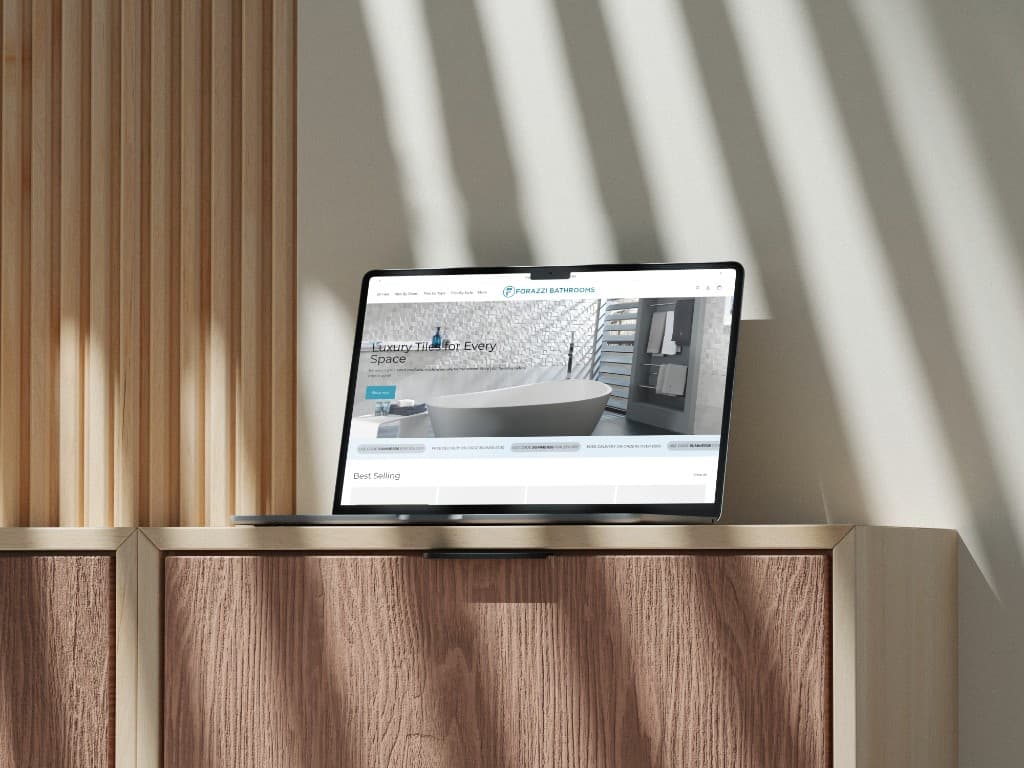
Premium bathroom products. Shopify. B2B ordering.
The problem
They had the tiles, the relationships with contractors and builders, and a catalogue of 468 products. They did not have a store that looked like any of that.
On Wix the range sat behind a generic template. A contractor searching for a dark graphite matte tile could not filter by finish. A bulk order meant opening products one by one, adding each line, then checking out. An order of £2,500 felt like admin. The buyer spending thousands had the same path as someone buying a single small item.
The details that decide a specification were buried. Size, finish, texture, slip resistance. The photography did not carry the material. There was no trade checkout. No bulk quantity, no invoice a project file could hold, no simple way to order the same specification again.
The site also looked cheaper than the product. Porcelanosa is a premium range. A generic template made a professional buyer wonder if the merchant was serious. That doubt matters when the spend is in the thousands.
What we did
- A move from Wix to Shopify, built for trade orders rather than a template shop.
- 468 tiles regrouped across finishes. Matte, polished, textured and natural stone effects, with SKUs and variants that stay consistent.
- Product pages led by the specification. Imagery, size, slip resistance, water absorption, finish, and the colours in that family.
- Trade ordering. Bulk quantity, repeat orders, and an invoice that lists what was bought.
- Collections by finish, such as snow white, dark graphite and natural stone, so the search takes three clicks.
- Photography and layout that match the price of the tile.
- Stock held properly across colour and size variants.
- Checkout that confirms the specification, and shows how to reach someone if it is wrong.
The detail
Wix and a trade basket
Forazzi's orders run from about £1,200 to £2,800 and above. A contractor might buy 40 to 60 lines in one go. That is a job, not a browse. Wix gave a tile merchant the same checkout as a small retail shop.
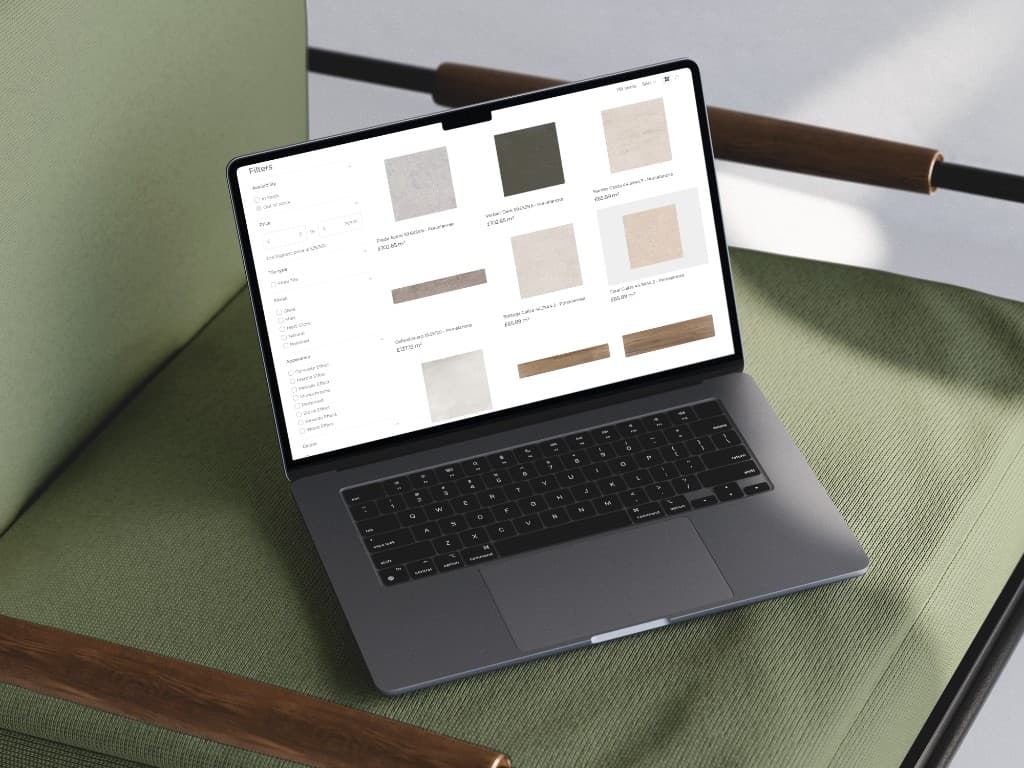
Trade buying needs a few things Wix did not have. Quantity on the collection. An invoice that carries the specification. A way to repeat the order. Sometimes a price that is not the public one. Every tile was added alone. There was no saved order and no account history worth using. Sixty tiles meant sixty clicks.
Shopify is where that basket can exist without becoming a support thread.
The specification is the product
A contractor does not buy "a tile". They buy a dark graphite matte, in a set size, with a slip rating they can stand behind. If the page does not say that, they cannot choose.
We rebuilt the pages around the specification. Size, the colours in that style, the finish, the ratings, and photography of the surface itself. Matte, polished and textured are visible, not implied. Tiles in one finish family sit together, so "all the dark graphite" is a filter, not a hunt.
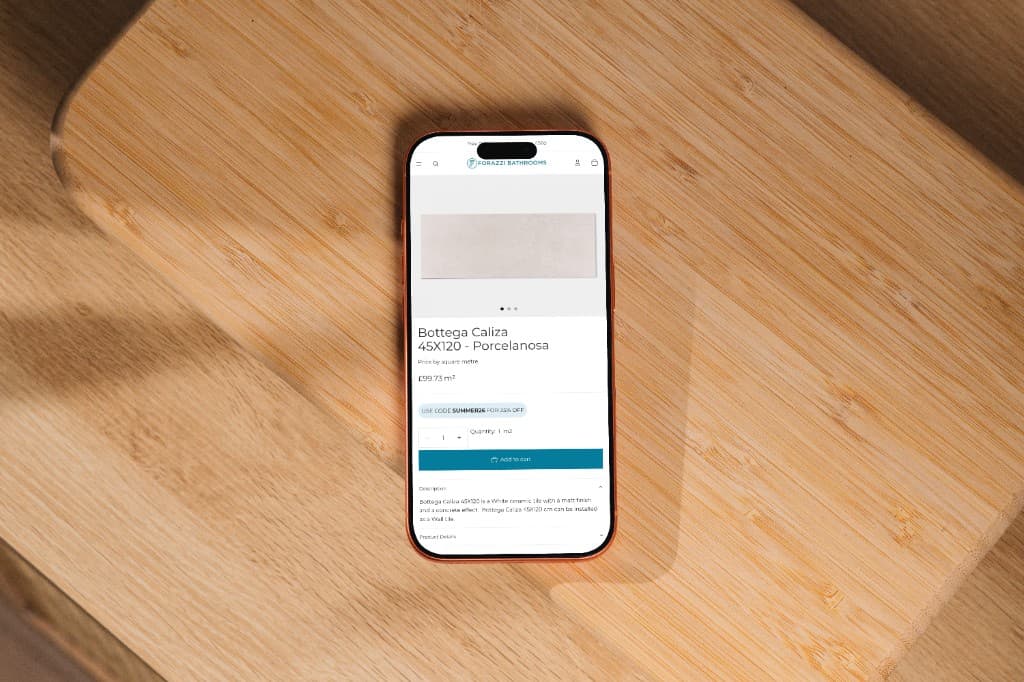
Quantity is in square metres, which is how a tile order is written. The buyer sees the finish, enters the area and adds it. They are not converting boxes on the product page. Checkout lists the finish, the size and the metres. That sheet can sit in the project file.
A large order, in one sitting
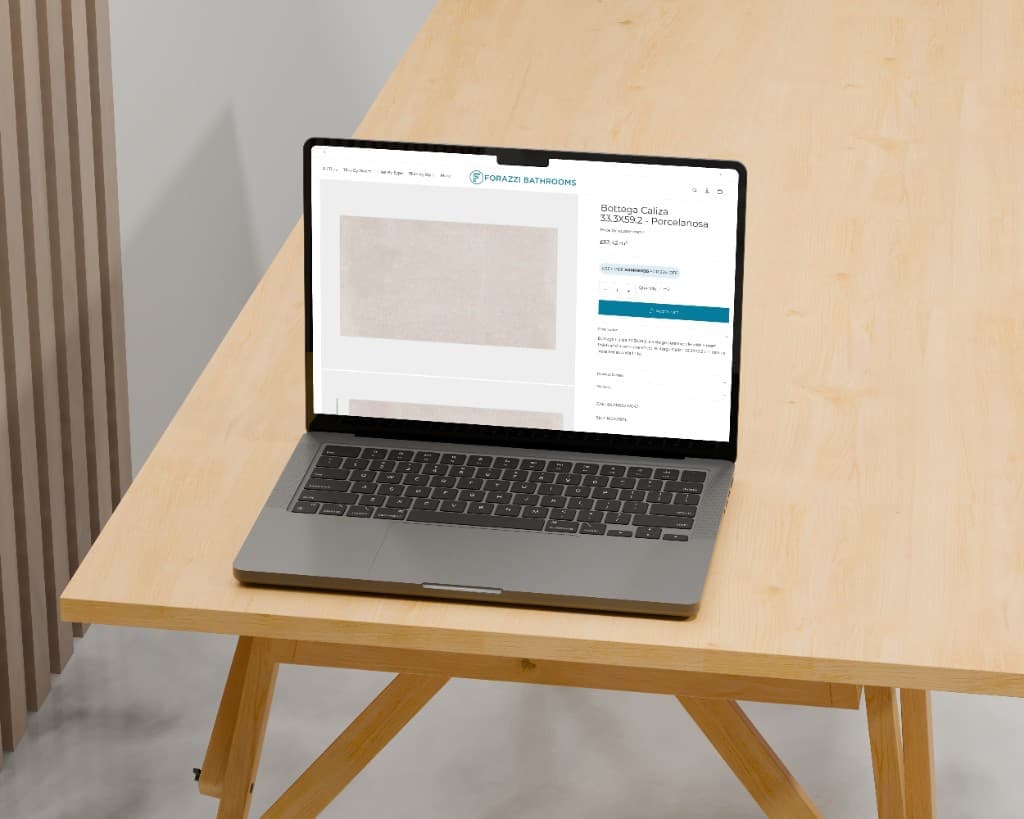
A typical basket is not one product. It might be snow white matte in one size, dark graphite textured in another, and a natural stone effect in a third. Three families, many lines, and a checkout that still has to be calm.
Bulk quantity sits on the collection. The buyer selects the specification, types the quantity and moves on. They do not re-open the product for every box. The invoice breaks the order down. Chris Jinks wrote that the site was delivered on time and on budget. His review is on this page.
Looking like the tile
Contractors comparing Forazzi with a cheaper supplier are comparing reliability and whether the page knows the product. High-resolution photography of the real finish, a consistent layout, and the specification in the open. The page has to say that this is a trade merchant, at the moment someone is about to spend £2,000 or more.
Behind that, 468 products with colour and size variants is a catalogue that gets messy quickly. A new finish should not mean rebuilding the product. Specifications stay consistent. Stock updates. The admin can keep up, so the shop can sell.
The results
Trade orders became a pattern, not a one-off. The store now takes more than 30 orders a month, averaging £1,200 to £1,800, with baskets of 10 to 60 lines. These are project purchases.
Contractors came back. By the third month, repeat customers were 40% of revenue. They had trusted the specification, the price and the checkout enough to use them again.
On Wix, some of the sale depended on discounting. With a store that looks like the range, the close is the specification and the quality. Margin improved because the discount stopped being the reason to buy.
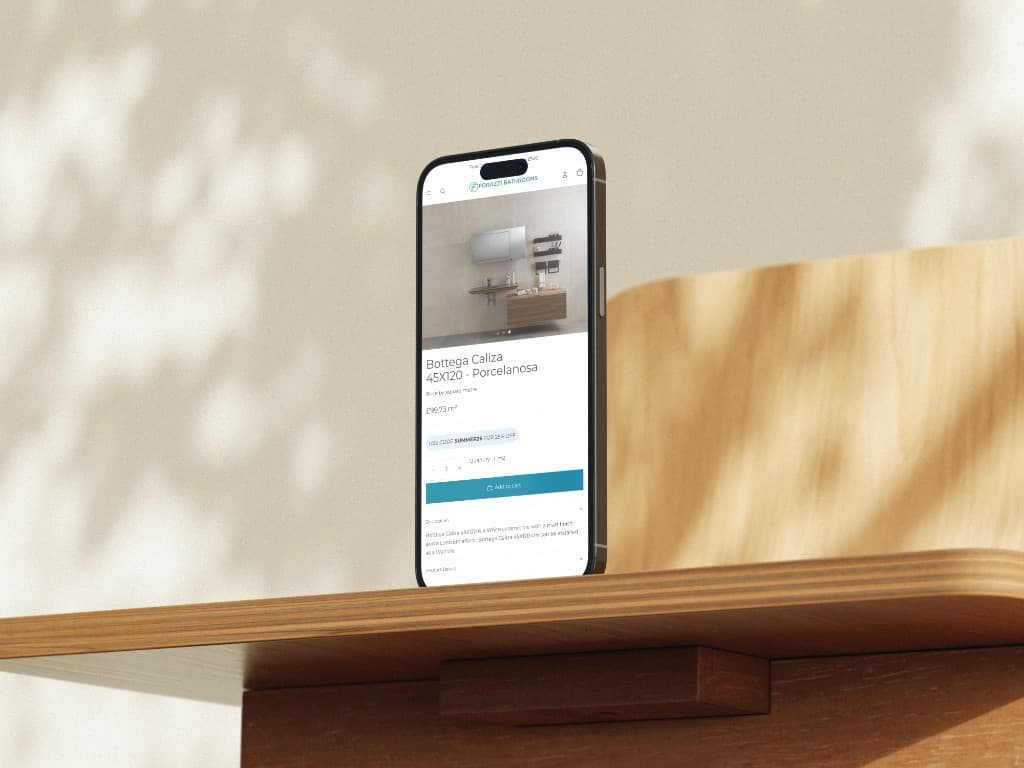
The catalogue is grouped so a finish is a collection, not a hunt through the whole range. A new size does not mean building the product again. The variant sits on the tile that already exists, with its own stock. The admin can add a finish without rebuilding the shop around it.
Large orders used to start as an email. The contractor sent a list. Forazzi confirmed it. Now they place it themselves. Support moved from "is this the right tile?" to delivery.
The same store works on a desk, where the specification is checked, and on a phone, where a repeat order is added. Both have to be usable. A contractor is not always at a laptop. A repeat order can start from the last one. The finish, the size and the metres are already known. The contractor changes the quantity and sends it again.
The stack
Platform: Shopify. Theme: a custom build, replacing Wix. Catalogue: 468 products, with size, finish, texture and colour variants. Collections: by finish, size and style. Checkout: built for bulk baskets, repeat orders and an invoice.
Premium tiles need a trade store
A generic template can sell a small retail product. It wastes the time of someone buying finishes for a project. Bulk quantity has to be ordinary. The specification has to be on the page. The photography has to match the price.
A contractor searches for a Porcelanosa finish, lands here, and can filter to it. They read the size, the rating and the colours. They add the quantity in square metres. They add the other finishes for the same job. The invoice is specific. The tiles arrive. The next project starts from the same account, because the first order was clear.
If your trade customers need a clearer way to buy, start with B2B commerce or a migration.
5.00
“Matthew developed and delivered our website on time and budget. The site looks fantastic and I will continue to work with Matthew for future projects.”





Want a store that works this hard?
Tell us where the platform or the plan is holding you back. We will tell you what we would fix first.