
Elecosoft already sold construction software that worked. They had never sold it direct. We built the Shopify layer, joined it to WordPress, and sent the licence key on purchase. That test is now their fastest-growing revenue channel.
Construction softwareShopifyWordPress
ElecosoftElecosoft
A test that became a revenue channel.
Elecosoft had never sold construction software direct. Shopify, wired into WordPress, became their fastest-growing revenue channel.

Fastest-growing
Revenue channel
GBP, USD and EUR
Currencies
Sent on purchase
Licence keys
Integrations
Shopify API, from the WordPress product pages, Stripe, in pounds, dollars and euros, SendGrid, for the licence email, Google Analytics 4, with custom events
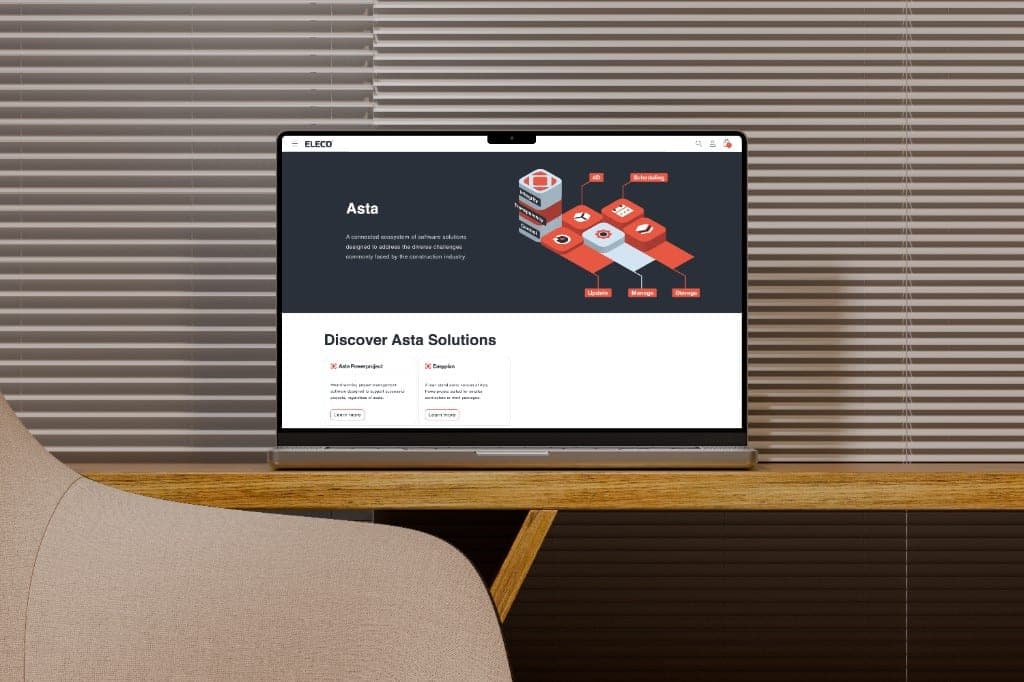
Construction software. Shopify. WordPress. Licence automation.
The problem
The corporate site is a large WordPress build across several regions. It already carries sales support, marketing, documentation and local content. It does that job well. What it could not do was sell a licence to a contractor or a small firm.
Putting checkout inside WordPress would have been the wrong project. Transactions, licence keys, more than one currency and customer accounts would have meant months of work on a stable site. It would also have landed on a small in-house team that was already running WordPress.
They needed a way to try direct sales without disturbing that stack, and without a new queue of manual work.
What we did
- A Shopify store in the same colours, type and layout as WordPress, so the buy step still feels like Elecosoft.
- Add to cart on the WordPress product page, through the Shopify API, without sending the buyer to a different shop.
- Buy now, straight into Shopify checkout.
- A licence key generated when the purchase completes, then emailed with the download and support access.
- Discounts for a three-licence pack, a five-licence pack and a site licence.
- Prices in pounds, dollars and euros, on pages aimed at each region.
- Support access opened automatically, so the buyer can reach documents and the helpdesk straight away.
- WordPress and Shopify accounts linked, so one login shows content and purchases.
- Google Analytics 4, with custom events, so the channel can be read properly.
The detail
The join
We did not ask Elecosoft to rebuild WordPress. We built a Shopify store that matches it, then wired the buttons with the Shopify API.
A contractor clicks Buy now on a WordPress product page. The product goes into the Shopify cart. Checkout is Shopify. The page around it is still Elecosoft. The buyer does not have to care which system took the payment.
The licence
Software is not a parcel. The buyer needs a key straight away, access to support, a download and a receipt. If someone on the team creates each key by hand, every sale is an admin task. At any real volume, that queue breaks.
The purchase completes. The key is generated. The email goes out with the key, the download and the support account. That happens in minutes. Nobody copies a key into an inbox.
Support access is the documents, the helpdesk and a way to raise a ticket. It opens with the key. It does not wait for someone to tick a box the next morning.
Before this, a licence could take 10 to 15 minutes of a person's time. Generate the key, send the email, open access, raise the invoice. Across a month of sales, that is days of work. After this, that time goes back to supporting the product.
Packs
A solo contractor buys one licence. A firm buys for a crew. Those are different orders, and they need different prices.
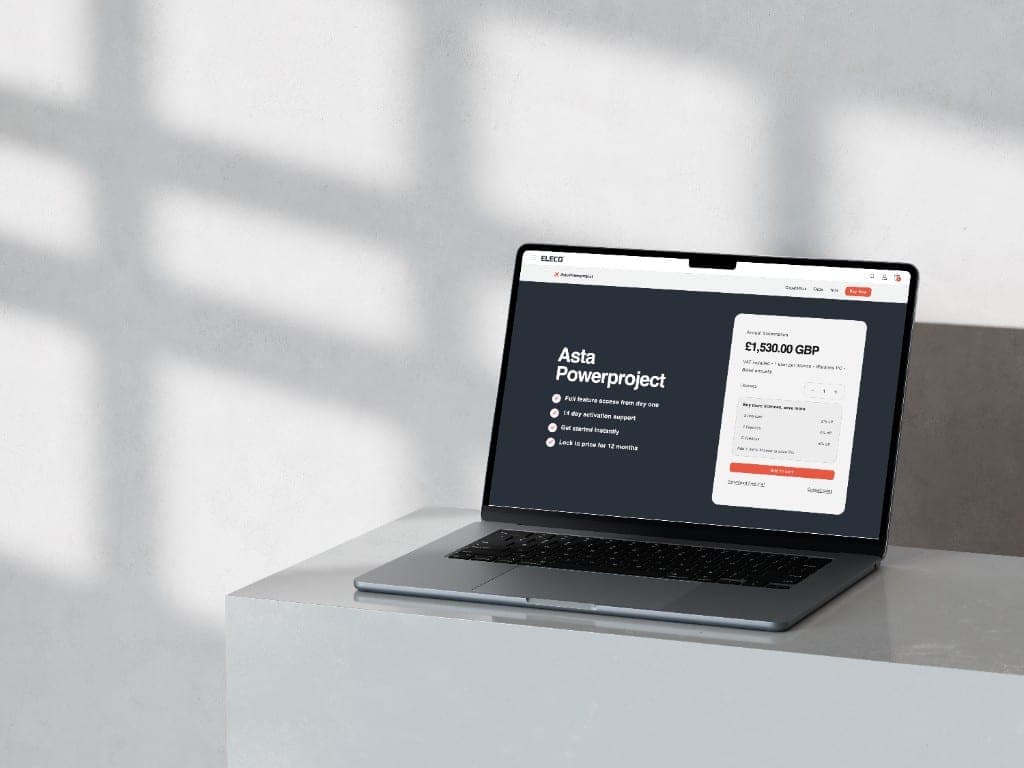
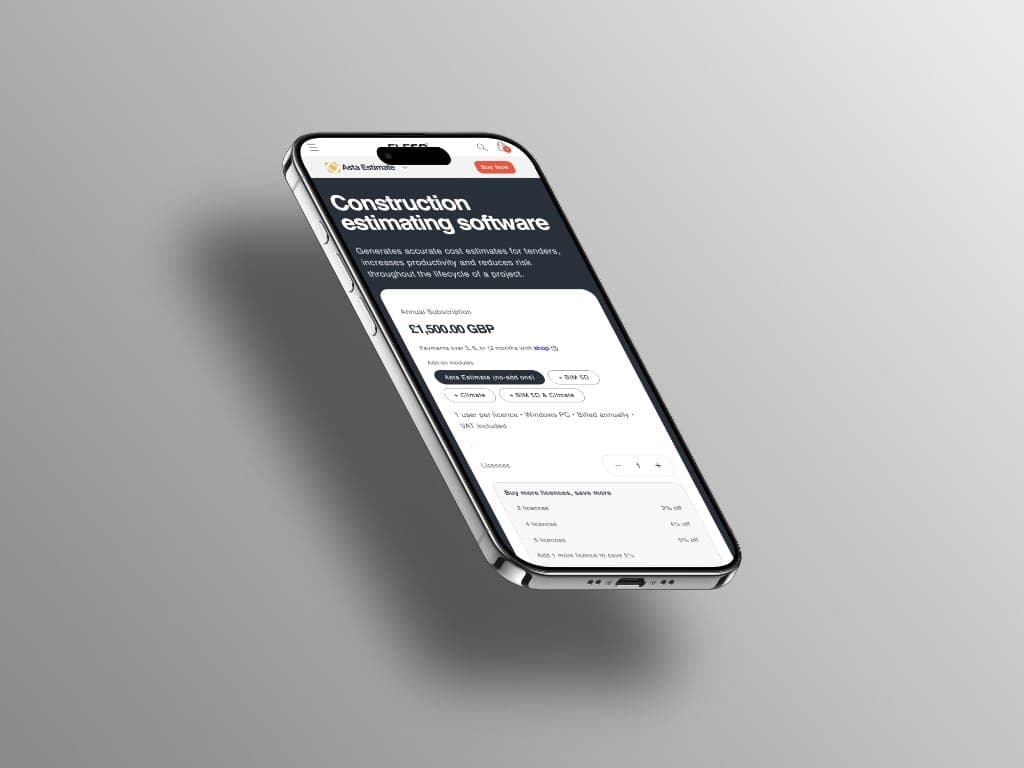
One licence is full price. A pack of three is 15% off. A pack of five is 25% off. A site licence is agreed with sales, not forced through the same button. The system counts the licences, applies the rate, makes a unique key for each one and emails them together. A firm can buy many licences in one payment, including an order of 50, and hand the keys out without a support ticket in between.
Currency and the account
Elecosoft sells in more than one country. A UK contractor expects pounds. A German contractor expects euros. The pages are aimed at the region, and Stripe takes the payment in pounds, dollars or euros. The buyer sees the currency they expect.
A contractor may already have a WordPress login for documents and the forum. Purchases live in Shopify. Two logins is friction. The accounts are linked, so one sign-in shows the content and the orders.
Transactional email goes through SendGrid. Google Analytics 4 records the path, including custom events, from the first click to the key leaving the building. The team can see which visits became sales, which products moved, and where people stopped.
A contractor can arrive from search, a recommendation, or a manual they already use. They read the product on WordPress. They see the price in their currency. Buy now opens checkout. The key, the download and the support login are in the inbox within minutes. Months later the same account buys a pack. The keys arrive together.
The in-house team stayed on WordPress. Shopify runs the payment. The API runs the button. The licence service runs the key. When the range grew, the same path took the next product. A page and a price were enough to put another tool on sale.
The results
The test showed traction in the first month. Contractors would buy direct. By three months the channel had momentum. By six months it was meaningful. By the end of the year it was a primary way they take revenue, and the fastest-growing one. What started as a trial became part of the business.
Licence automation took the provisioning work off the support team. The buttons kept the purchase inside an Elecosoft page, so it did not feel like a detour. Packs made a bulk order ordinary. Firms buying five, ten or more licences in one go became a normal pattern, and the average transaction rose with that.
Regional pricing meant a buyer in another country was not asked to guess the currency. The analytics gave them a reason to spend more on the range, on ads and on the landing pages. Early sales paid for the next step.
We have not published a revenue figure for the channel. The published result is the direction. A test became the fastest-growing way they sell. The same store now carries a wider range, because the first products proved the path. Ads and landing pages followed the sales, rather than the other way round.
The stack
Platform: Shopify, in the same design language as WordPress. Join: the Shopify API, from the product page to the cart. Licences: keys generated and emailed on purchase. Payments: Stripe, in pounds, dollars and euros. Email: SendGrid. Analytics: Google Analytics 4, with custom events.
A test that could run without a sales queue
Selling through a person works for a large contract. It does not work for a hundred small firms buying one licence each. You cannot put a sales call on every one of those orders. You need a path from "I want this" to "I have the key" that does not wait for office hours.
That is what this store is. Content stays in WordPress. The transaction stays in Shopify. The buyer sees one company. A contractor can buy one licence and start. Months later they can buy a pack for a crew, at the pack price, with a key for each seat. No ticket in between.
If you sell software and the website was not built to take payment, start with design and build or integrations.
“Working with Parallel Commerce has been a fantastic experience for us. From the outset, Matt came across as genuine, knowledgeable and passionate about what he does.
We quickly built a strong level of trust in him and felt confident that he understood our business and exactly what we needed to launch an eCommerce platform alongside our existing website.
His attention to detail, commitment and enthusiasm really stood out, and the end result was a website that exceeded our expectations. We've continued working with Matt ever since, which speaks volumes about the relationship we've built and the confidence we have in him and his work.”






Want a store that works this hard?
Tell us where the platform or the plan is holding you back. We will tell you what we would fix first.